
Selected work.
Eight projects across complex systems, product discovery, and founding design.
Making complex systems work.
Recent institutional-finance products, shaped by operational, legal, and technical constraints.
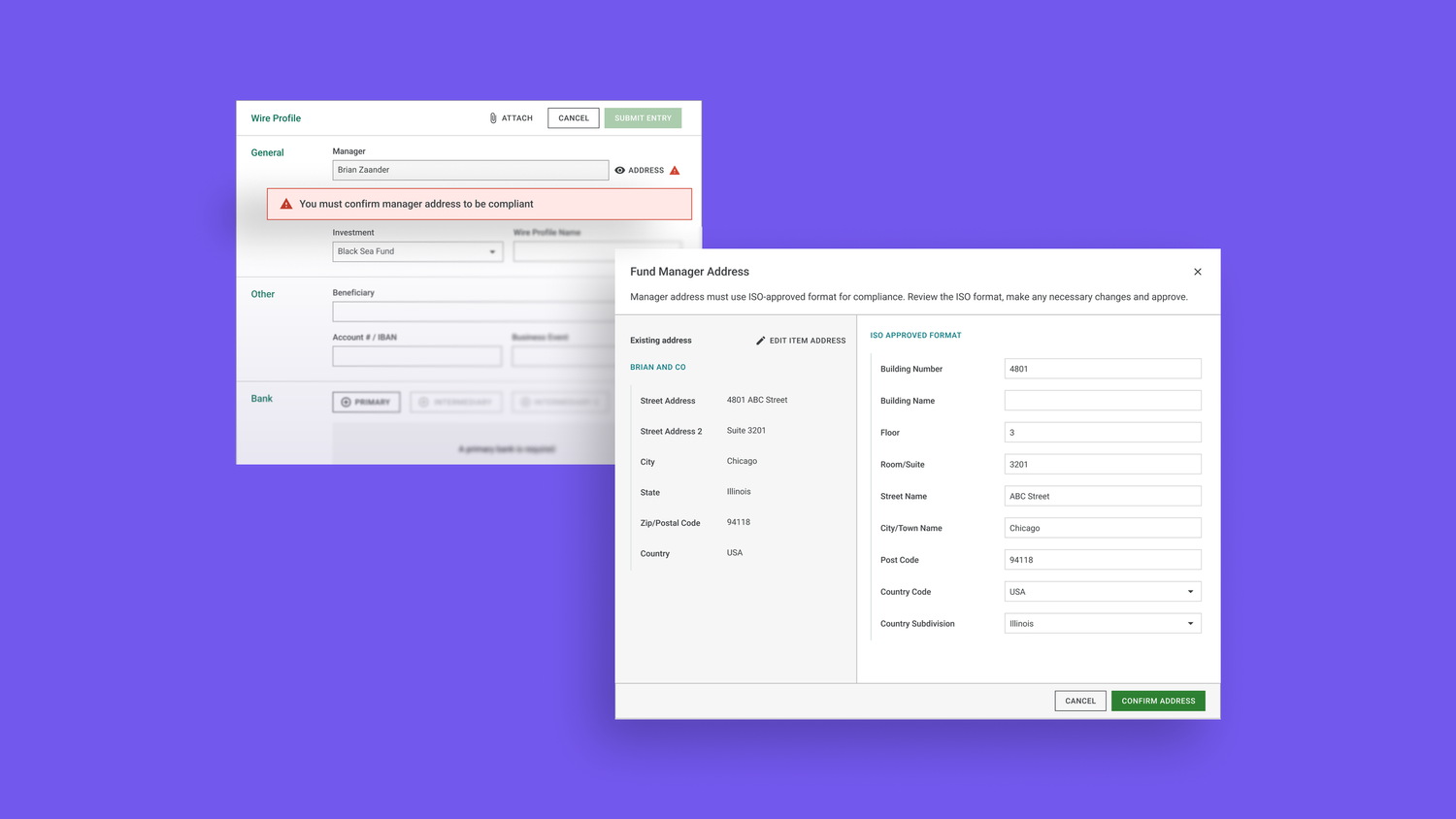
Wire Profiles
The first time FOS took on actual money movement — navigating compliance requirements that reshaped the design at every stage.
Outcome: Implemented following legal approval; positive client feedback.
Public summary
The problem
Front Office Solutions had never been accountable for moving actual money. Wire profiles define where and how money is delivered, so any error in a profile is an error in where the money goes.
Key decisions
- Once the PM secured access to official ABA, BIC and SWIFT databases, replaced the internal bank repository with a lookup, putting compliance on the source data instead of on the user.
- After legal review flagged the missing manager’s address, designed a panel that shows the familiar address alongside its automatic ISO conversion, so a legal requirement never became the user’s problem.
- Added a profile usage view and an edit-aware approval history after client representatives asked for an audit trail.
Outcome
Approved by legal review, implemented, and received positive client feedback.
- Team
- Product Manager · Engineering · Legal & Compliance · Client Representatives
- Timeline
- ~2.5 months (extended 2 weeks for legal review)
- Users
- Internal operations teams managing cash movement for institutional clients
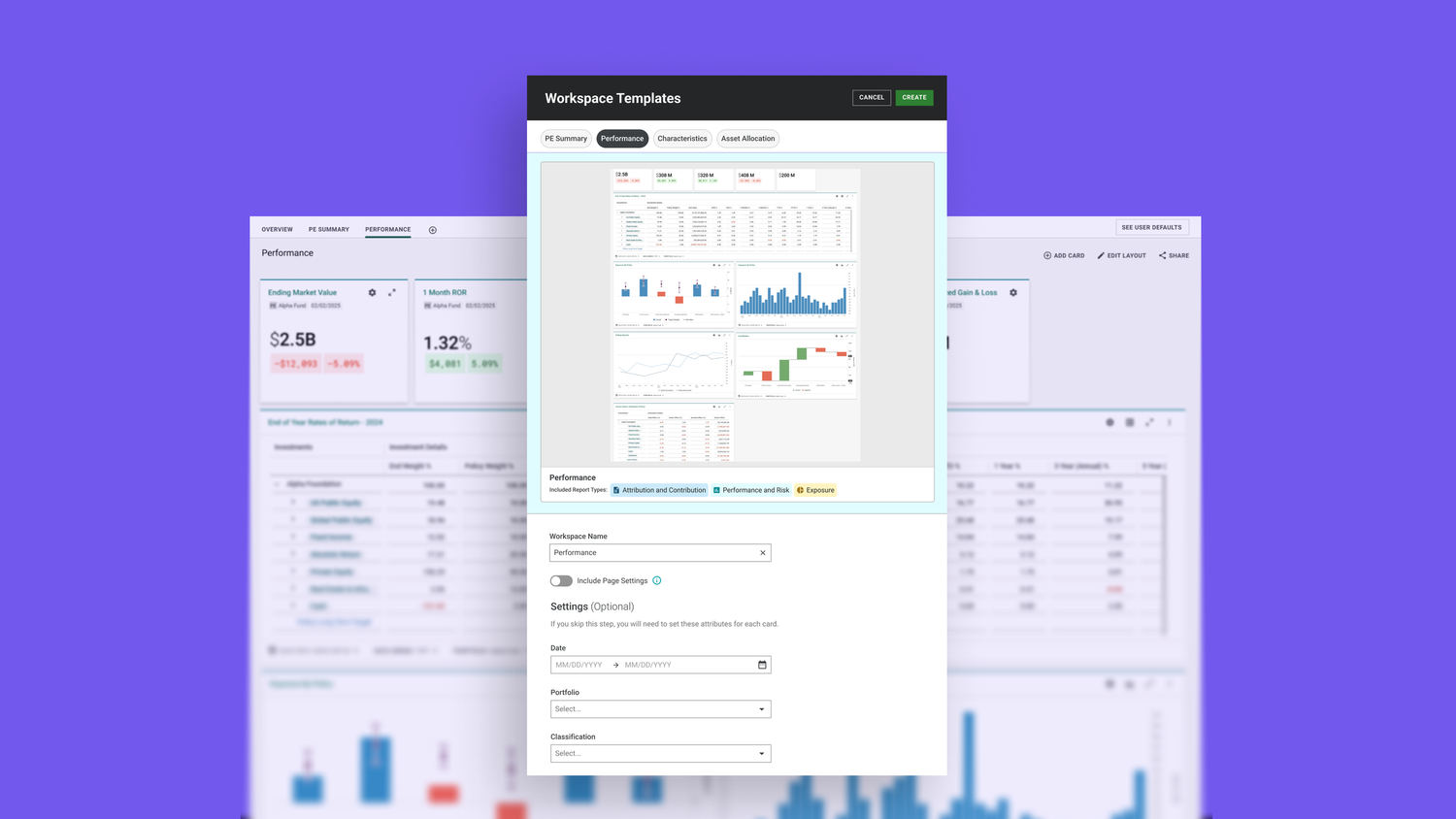
Investment Analysis Dashboards
Four months, a hard deadline, and a two-week pivot from incremental fixes to a template system that clients actually wanted.
Outcome: Feature improvements shipped; a template direction was carried forward for future development.
Public summary
The problem
Workspaces are the first screen every Front Office Solutions client sees, and clients and internal teams kept calling them rigid. With four months until the annual client advisory meeting, the team needed to show real movement.
Key decisions
- Prioritized dashboard flexibility over another landing-page rework, using a pain-versus-effort workshop with engineering in the room.
- Fit research around delivery: tested early builds and ran async sessions with eight internal users in one week, instead of a long study.
- With two weeks left, made the case that the fixes still felt patched together, and teamed up with the PM who had first suggested dashboard templates to bring them to the wider team.
Outcome
Feature improvements shipped; the dashboard template concept was carried forward for future development.
- Team
- Product Manager · Engineering · Product Experts
- Timeline
- 4 months
- Users
- Institutional clients and internal teams
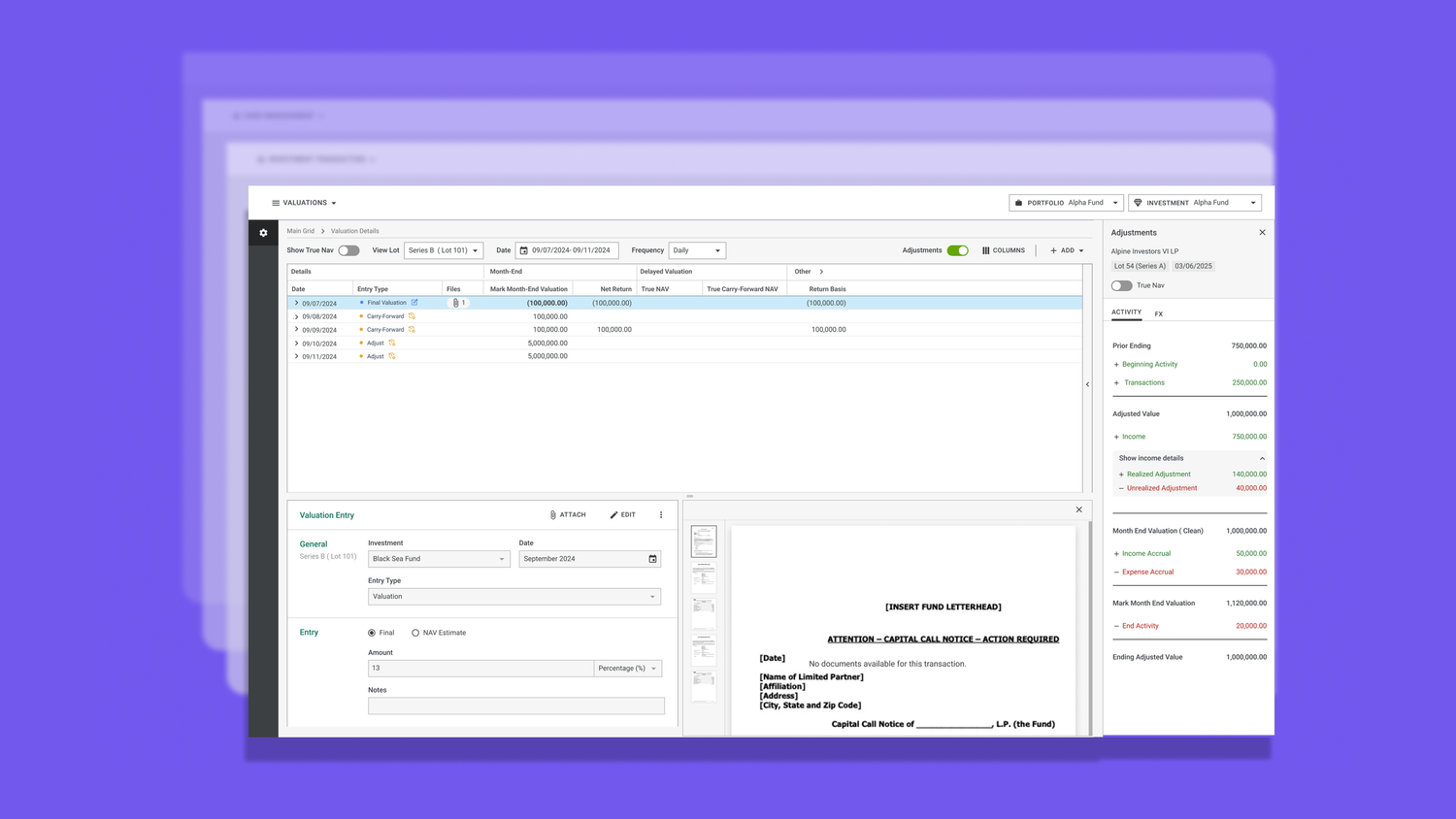
Mission-Critical Workflows
Migrating a 20-year-old operations platform to web — with a high-stakes new client relationship at play with every release.
Outcome: Shipped across multiple releases with strong adoption.
Public summary
The problem
Operations teams had relied on the same desktop tool for over 20 years for transactions, wires and valuations. Migrating it to web meant rebuilding those daily workflows, with representatives of a new wave of large institutional clients giving feedback throughout.
Key decisions
- Proposed a three-panel layout showing form, table and document at once, and argued for two purposeful adjustments instead of full customization. It became the foundation for every operational flow.
- Grouped seven internal valuation states into three user-facing categories, validated jointly with internal operations staff and external client representatives.
- After launch, replaced the entry-form dropdown with tabs, giving each a visible state (empty, existing data, draft) so the one-entry rule was clear before users hit an error.
Outcome
Shipped across multiple releases with strong adoption; valuation was the most anticipated release on the roadmap.
- Team
- Product Manager · Engineering · Product Experts · External Client Representatives
- Timeline
- 2-year multi-phase engagement; valuation phase spanned 3 months
- Users
- Internal investment operations teams and institutional clients worldwide
Finding the right problem to solve.
Research that changed the direction of a product or clarified the right scope.
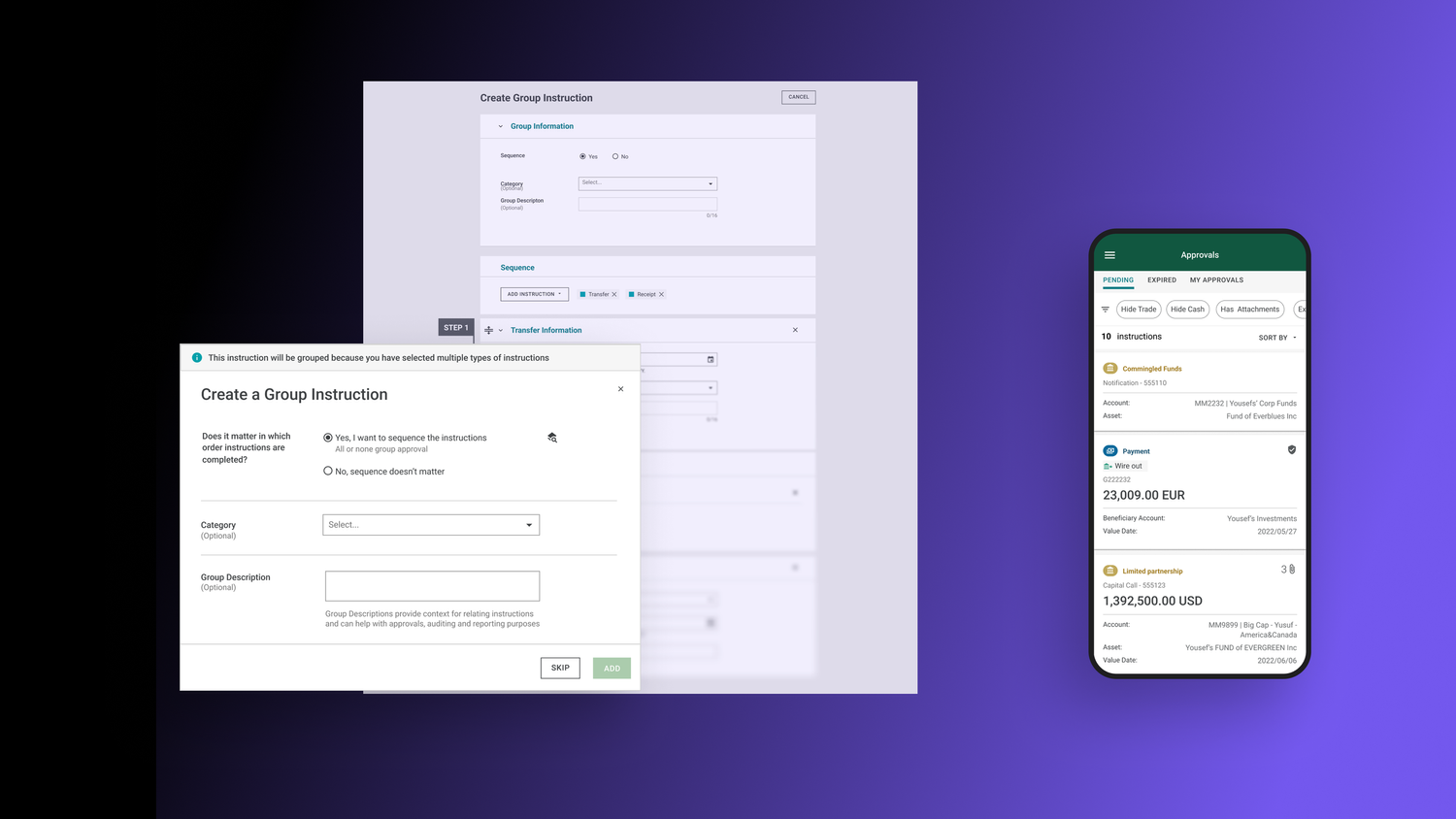
Money Movement Workflows
Two workstreams: discovery that helped the team choose the right direction, and a mobile delivery that required bringing order to a poorly documented product space.
Outcome: Desktop research informed priorities; mobile trade approvals shipped in November 2022.
Public summary
The problem
Two workstreams on an institutional platform: desktop discovery into how operations teams track related instructions across disconnected tools, and a mobile release adding trade approvals to a mobile app that clients already used.
Key decisions
- Tested three concepts with 11 clients, including a one-click group approval; compliance needs led users to choose a more modest option.
- Built a shared field reference with the PM for every trade type before designing mobile, because none existed.
- Settled an internal debate through usability testing for what capital calls show first on mobile, then worked with Design Systems and Accessibility to meet requirements in code.
Outcome
Desktop research shaped 2023 roadmap prioritization; mobile's second major release shipped November 2022, adding trade approvals for the first time.
- Team
- Product Managers · Engineering · Product Experts · Design Systems · Accessibility Team
- Timeline
- July 2021 – December 2022
- Users
- Institutional clients, from multinational corporations to sovereign funds, and their operations teams
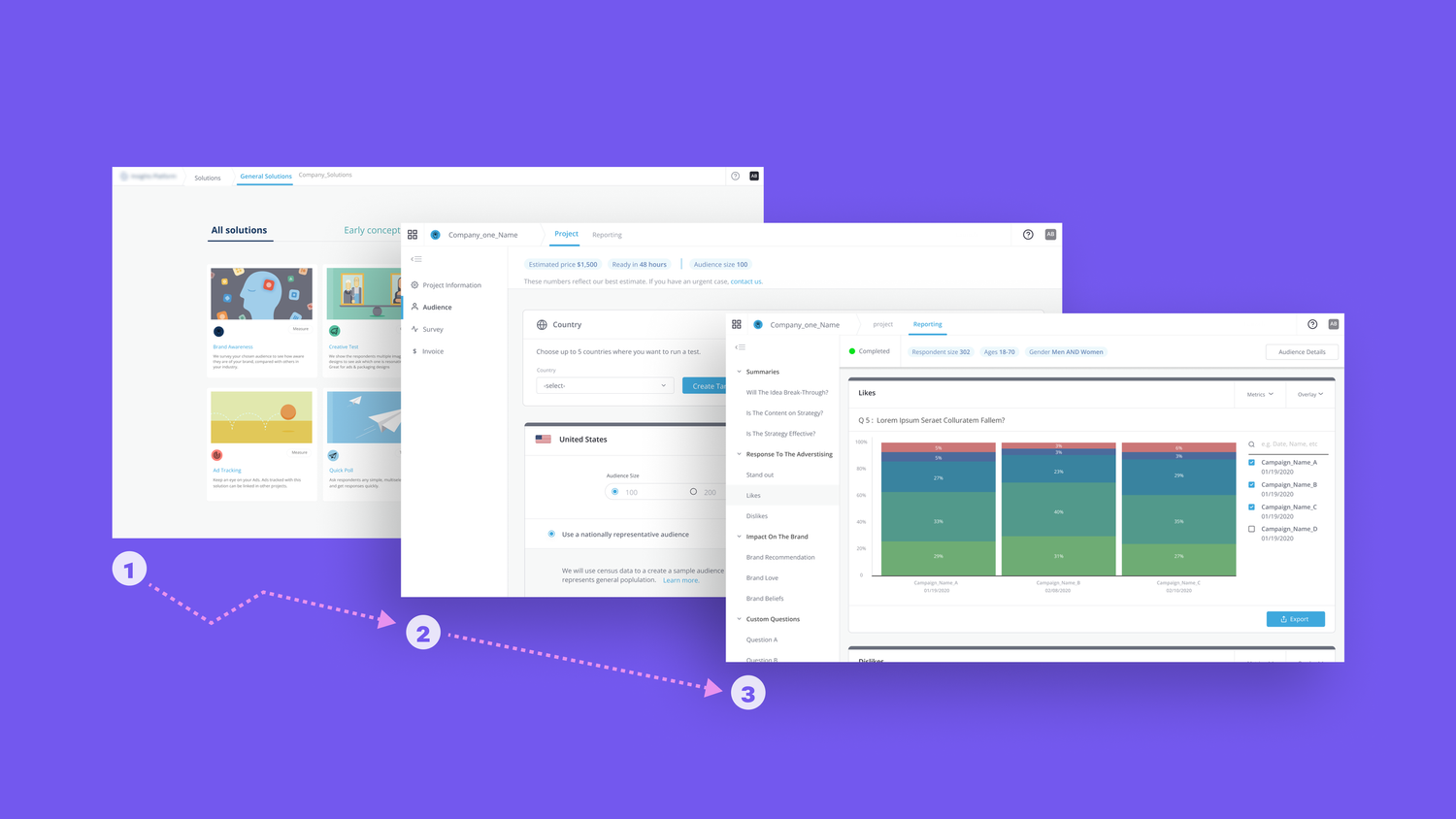
DIY Market Research
One research insight reframed the entire product: non-experts don't want a toolkit, they want confidence that they've picked the right method.
Outcome: Prototype designed and tested; implementation began before Covid-related layoffs.
Public summary
The problem
Dynata wanted a self-serve research platform for business professionals with no market research expertise, a market it had not served before. The product had to make research feel trustworthy enough that non-experts would act on the results.
Key decisions
- Ran discovery with the PM, which showed non-experts want confidence that a study will work, not an expert toolkit. That finding shaped every design decision.
- Gave every study template its price, timeline, methodology and a comparison with related options, so users could trust their choice.
- Used a three-part structure for insights (overview, specific questions, custom questions), so results had the same shape across every study type.
Outcome
Prototype designed and tested with internal stakeholders and real users; implementation begun before the role was eliminated in Covid-related layoffs.
- Team
- 2 Product Managers · Engineering · Larger design team of 7
- Timeline
- December 2019 – May 2020
- Users
- Business professionals without market research expertise
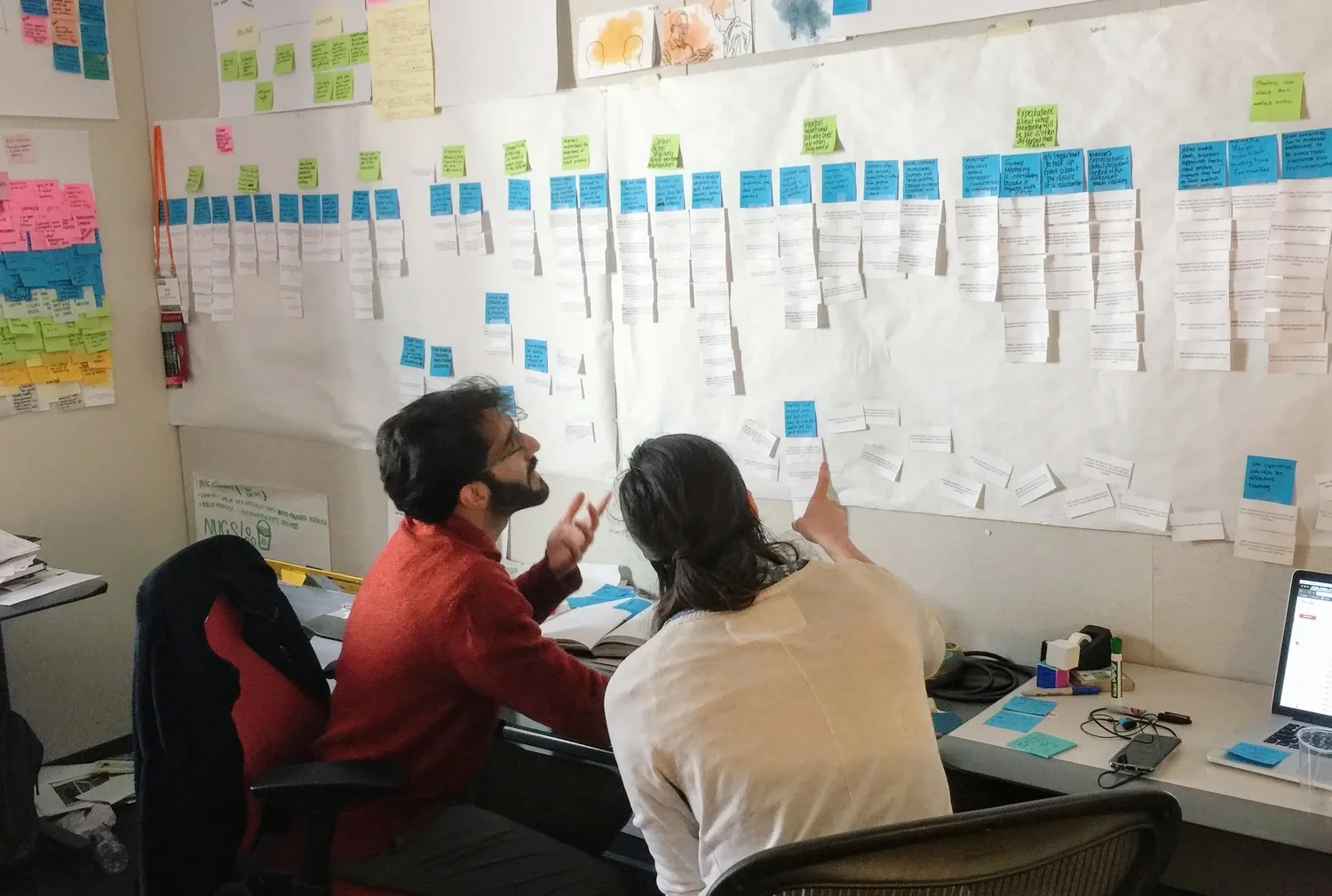
Magnify
An eight-month CMU capstone with a real nonprofit client — and a research finding that reframed who a mentor actually is.
Outcome: Concept developed with the nonprofit; the app was not funded or built.
Creating products from the ground up.
Building interaction, research, and visual foundations at an early-stage company.
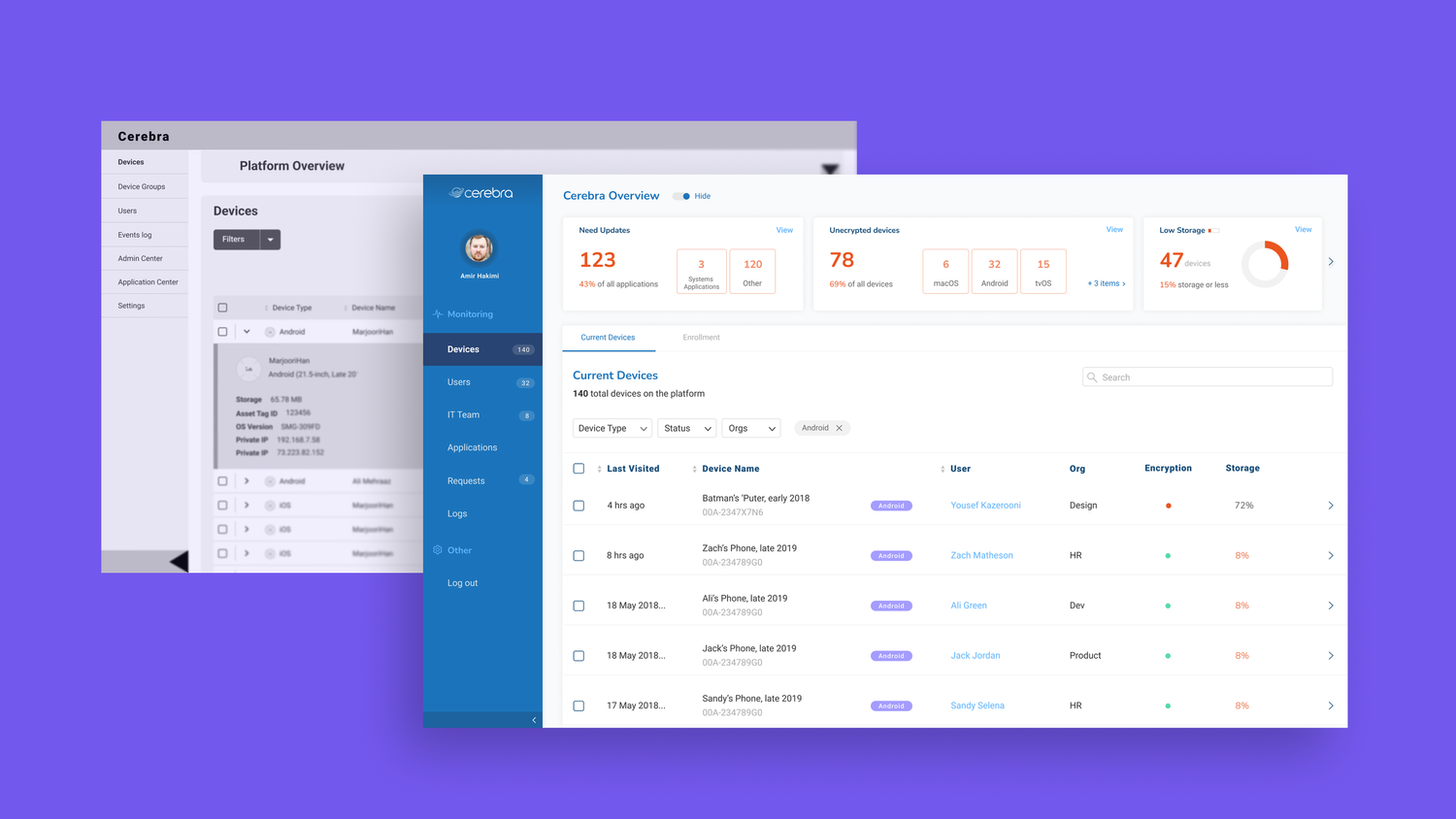
Cerebra Console
Sole designer at an early-stage startup — building the research foundation, interaction system, and visual language in preparation for the first pilot.
Outcome: Research and interaction foundations delivered; larger structural redesigns were handed off but not built.
Public summary
The problem
Cerebra's working prototype for IT administrators had never been tested with real users, and what these users needed lived only in the engineers' heads. There was no design infrastructure and no documented flows ahead of the first pilot.
Key decisions
- Documented the domain for the first time, then ran usability studies and proposed sorting findings into structural, stylistic and bug buckets, ranked with the founders on benefit versus cost.
- Developed, with the product team, a “device shell” record so IT administrators could start and track enrollment before a device came online.
- Proposed moving app updates out of the device list into a dedicated application center, organized by update type and priority.
Outcome
Delivered the product's first documented research foundation and interaction system; addressed bug fixes and interaction improvements during the engagement, with structural redesigns (enrollment, application updates) handed off documented but unbuilt.
- Team
- CEO · Engineers · Founders
- Timeline
- December 2018 – December 2019
- Users
- IT administrators managing device fleets for organizations
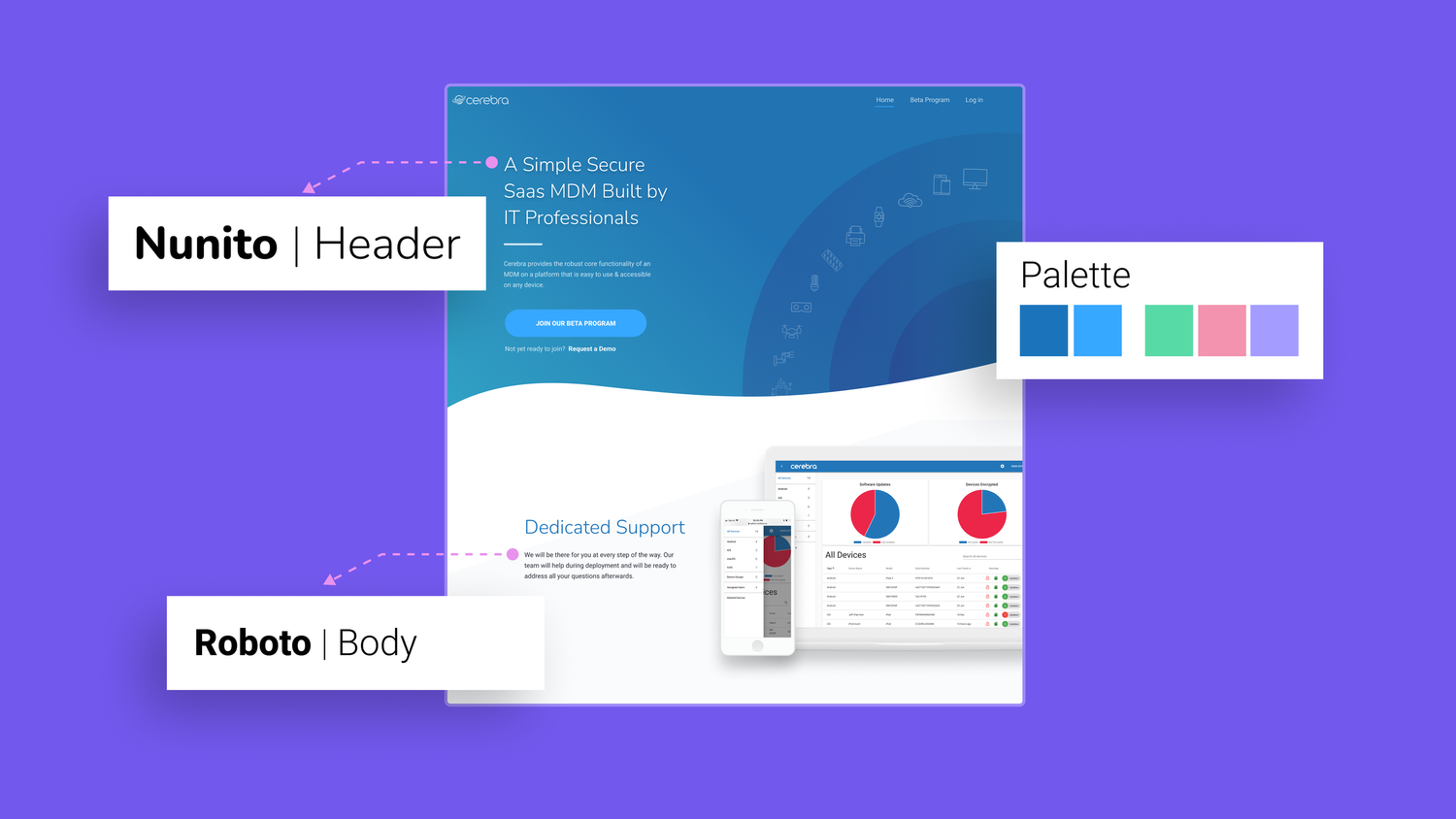
Cerebra Brand & Website
One month, one designer — the visual system built here became the foundation for everything that followed.
Outcome: Brand identity delivered and applied to the product; proposed marketing site did not launch.