

ALIGNING PRODUCT AND ENTERPRISE DESIGN SYSTEMS
From Large-Scale Redesign to Incremental Convergence
Overview
Role: Lead Product Designer
Focus: Facilitating alignment between Front Office Solutions and the enterprise design system
Scope: Addressing component divergence and accessibility risks across the platform
Index
Context
The Challenge
Finding a Champion
Building Alignment
Next Steps
Outcome
Context
Front Office Solutions ( FOS) was developed while Northern Trust’s enterprise design system was still evolving. By the time the corporate design system matured, the two codebases had diverged.
Although designers occasionally adopted corporate patterns, the component libraries remained separate. As accessibility requirements became stricter globally, this divergence became a growing concern.
The Challenge
Designing new features for FOS required balancing:
Existing product patterns
Corporate design system guidelines
Engineering capacity for any changes to the current patterns for closer alignment with the enterprise design system
Accessibility requirements and an audit of whether those requirements were met by existing patterns.
Meanwhile, engineers had limited bandwidth to update the product component library, which began creating subtle inconsistencies across the platform.
Previous attempts at large-scale platform audits had failed due to lack of product team buy-in.
Finding a Champion
The opportunity to revisit the issue emerged during a project involving form components. A Product Manager expressed frustration about outdated components and inefficiencies.
Recognizing an opportunity, I proposed exploring selective migration of components to the corporate design system. Recent improvements to the corporate system made it significantly more flexible than earlier versions.
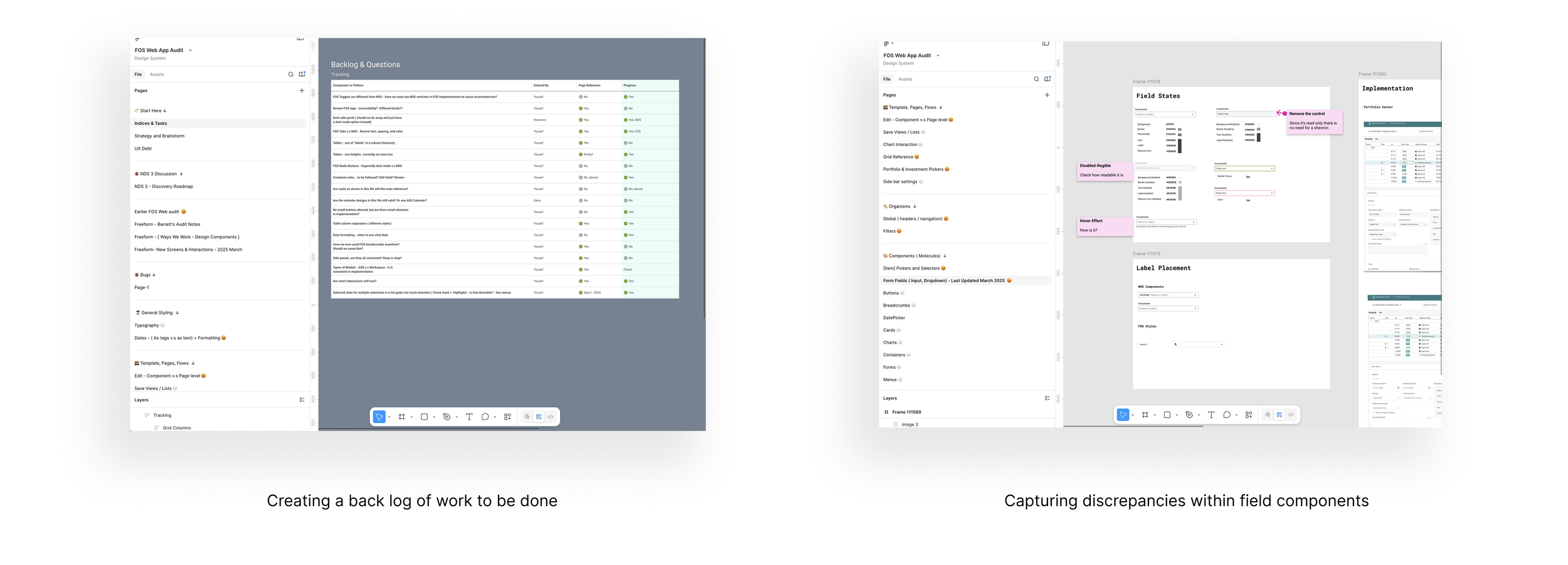
I created a backlog of components and issues to review. The discrepancies in the field components made the value of investing time in connecting with the enterprise design system team clear.
Building Alignment
To rebuild trust between teams, I took several steps.
First, I conducted listening sessions with other product managers to understand their concerns.
The main issues included:
Incompatibility between codebases
Concerns about large-scale migrations
Fear of disrupting product delivery
Next, I collaborated with the corporate design system team to outline a phased convergence approach.
This roadmap addressed both technical and organizational concerns.
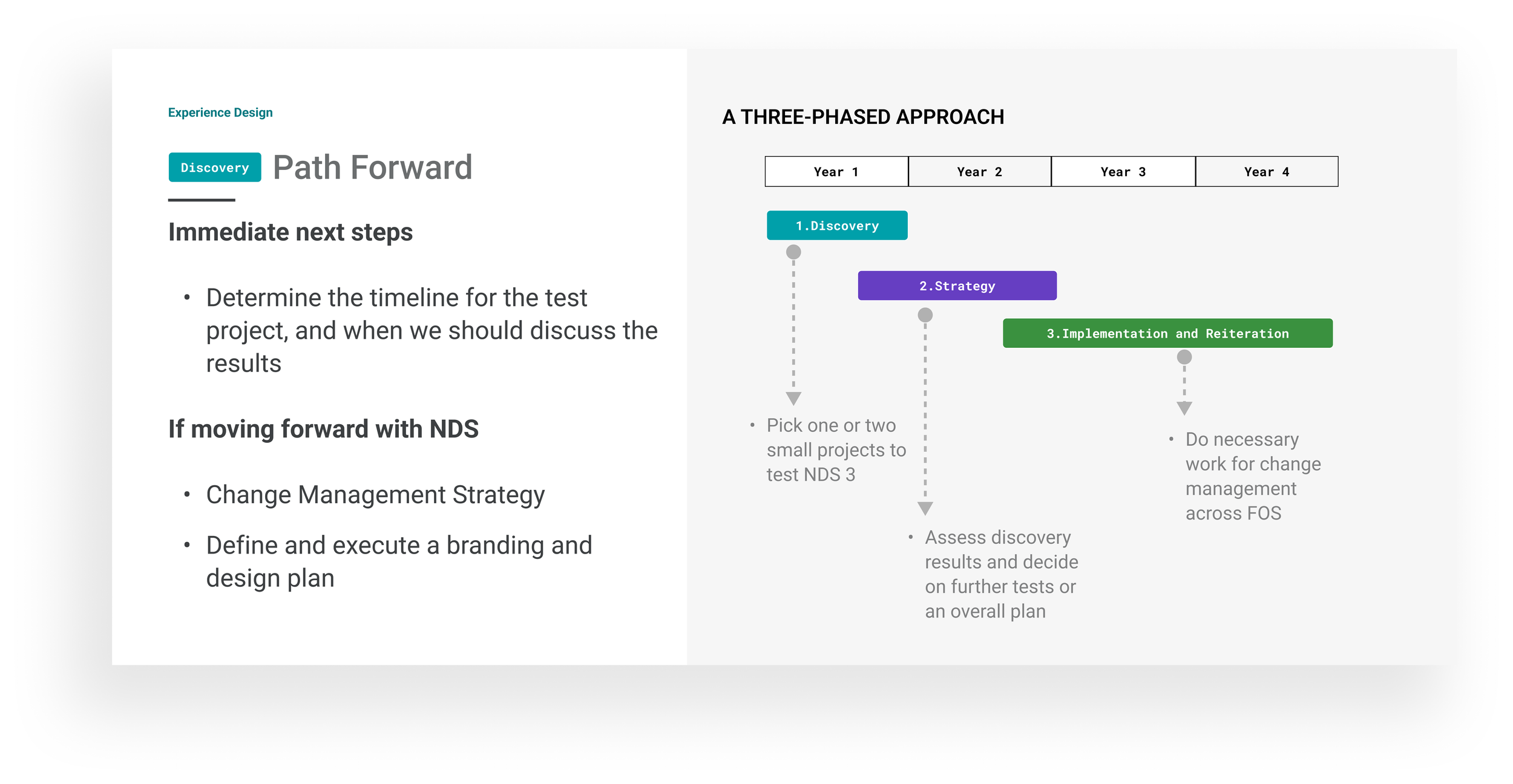
In presenting this idea, it was critical to provide a step-by-step approach, and leave room for their input, so that we could move this project forward together.
Next Steps
The initiative is currently progressing in two areas.
First, the FOS team ( Design and Product) is identifying opportunities to test migration of individual components during new feature development.
Second, the design team has started an audit of the platform focusing on accessibility gaps. These gaps provide natural opportunities for convergence since accessibility improvements can be prioritized within the product roadmap.
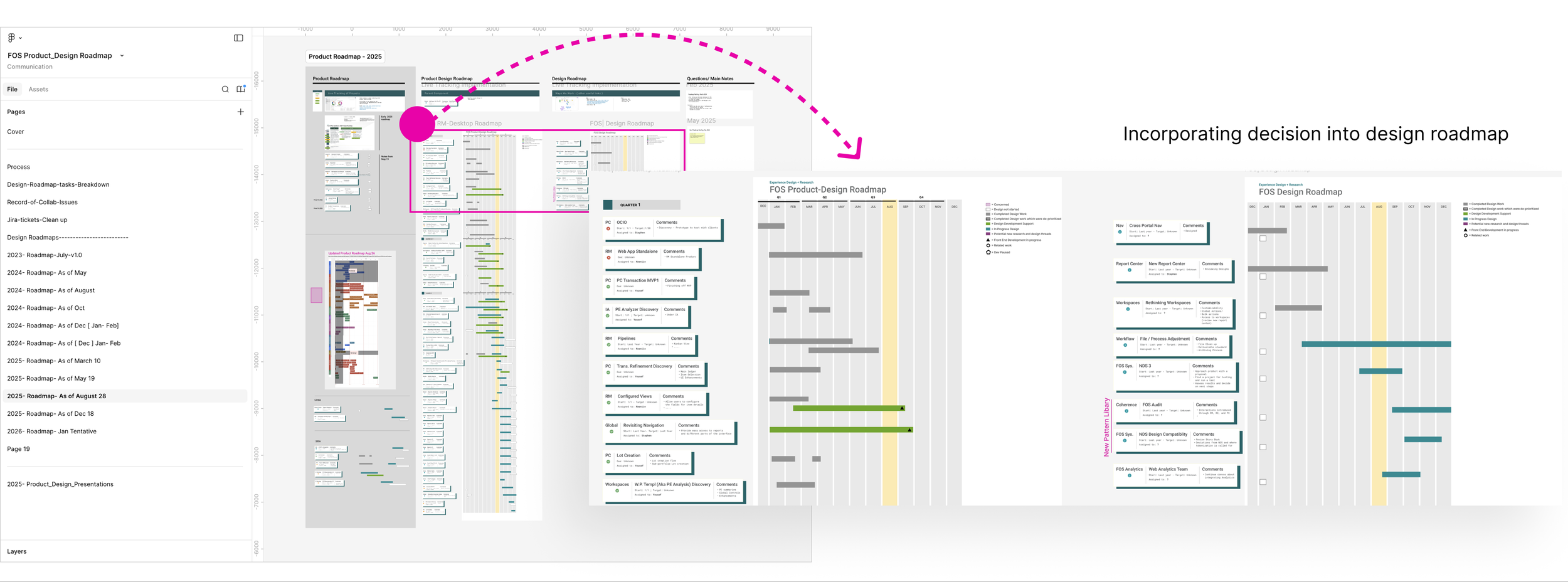
To ensure that Design is properly resourced, I had started creating a design roadmap based on product priorities and roadmap. I used this document to capture what work design needed to accomplish toward a more coherent Design System.
Outcome
The initiative re-established collaboration between the Front Office Solutions team and the corporate design system group and shifted the discussion from large-scale migration to a more practical incremental convergence approach.
As a result:
Product and enterprise design system teams began coordinating on potential component migration opportunities.
A phased approach was defined to evaluate alignment during future feature development.
The design team launched an accessibility-focused audit to identify components that could benefit from enterprise design system adoption.